
HOW AGENTS THINK
A Deep Dive Into an Agent’s Brain

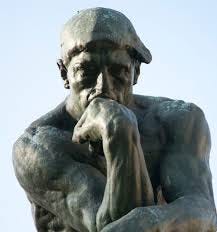
By definition, literary agents are dedicated advocates for authors, committed to serving the best interests of their clients. That is all well and good, and it would be great if it were completely true. But if you drill deep into the thought processes of the typical practitioner, you will uncover a tangle of complex and often contradictory calculations, strained loyalties and conflicting impulses.
When addressing any problem, an agent must juggle countless factors. They can be boiled down to three: How will it affect the author? How will it affect the publisher? And, How will it affect the agent? You can ask us how we arrived at a decision, but because our ratiocination is instinctive and often lightning-fast, it’s not easy to articulate the steps we take when we process information. So, let’s slow a typical set of deliberations to a walk. Take this common scenario:
Jack Agent has represented Jane Writer from her very first book, a cozy that Jack talked Linda Editor into buying on the strength of Jack’s faith in Jane’s future. Jack and Linda are tight friends, having graduated from Columbia University’s publishing program together. Linda is now a fast-rising young editor at a small publishing house.
Jack’s faith in his author turned out to be absolutely correct: her novels have gotten better with each new offering; she has built a large and enthusiastic fan base and is on her way to a big career. Best news of all? She has been working on the book of her heart, and from what Jack is able to glean, it promises to be her breakout book. In anticipation of this big event, Jack and Linda toast the success of their shared young protégé. Surely, nothing could come between these devoted colleagues. Or could it?
It happens that Jack’s clients have attracted the attention of Max Publisher, the head of one of the five major houses in the industry. Max takes Jack to a sumptuous lunch at a four-star restaurant. Towards the end of the meal, Max says, “Tell me about Jane Writer.”
“She’s terrific and getting better.”
“Is she happy where she is?”
A burst of adrenaline surges through Jack’s innards, for this innocent question is actually a coded message fraught with significant possibilities. Cautiously, he replies “Quite happy.”
“But she could always be happier, right?”
“Couldn’t we all!” Jack exclaims with deliberate disingenuousness.
Max leans in and mutters the name of Jane’s publisher. “It’s a good house but let’s face it, they’re small, they’re underfinanced, they don’t really know how to blow a book out. If she’s looking for a new home, we could make it worth her while.”
Jack cannot pretend to be uninterested. “She’s very loyal. And she loves her editor. It would take a ton of money to tempt her to move.”
“Tons of money are us,” Max replies with a laugh. “Not just for acquisition but marketing and promotion, the whole nine yards. We offer advantages that her publisher cannot possibly match. Think about it,” he concludes, summoning the check with a scribbling gesture to the waiter.
Think about it? Jack has scarcely stepped out of the restaurant than the wheels in his brain start whirring like a grandfather clock on speed. He walks to the park, plops himself down on a bench and starts to review the innumerable possibilities that his conversation with Max has provoked.
His very first thought is about Linda Editor, and it is a troubled thought. Linda is his dearest friend in the business, sweet-natured and trusting. She has invested years of her life building Jane’s career. The thought of taking Jane away from her is almost unbearably painful. It will break her heart.
Or will it? Linda has been in the business long enough to have witnessed predatory publishers swoop down and carry promising authors away from small houses like hers. Perhaps she knows that that could happen here, too and is resigned to its inevitability.
Jack’s second thought is of Jane Writer. Would not plucking her out of her happy nest traumatize her? Linda has not just been a superb editor but is as close to Jane as a sister, having seen Jane through numerous crises, comforting her through heartaches. Everyone at the publishing company loves Jane and treats her like family. Surely Jane would not abandon this devoted friend.
These ruminations are so disturbing to Jack that he wonders whether he should keep Max’s proposition to himself. After all, it was not a hard offer, just a sounding-out, right? But he readily rejects that option. He is duty-bound to tell his client about it.
And who is to say that Jane would reject Max’s pass out of hand? Doesn’t she, like every other writer, harbor fantasies of fame and fortune? Perhaps deep down she knows that if she’s going to hit the big-time, she will need a major publisher to move her to that yearned-for plateau? Maybe she is thinking she needs a bigger home for that important book she is completing.
Jack reflects on that big book and realizes that if Max wants it, maybe some other big houses might want it too. Suddenly he is thinking of opening bidding up to other publishers - including Linda’s company. A big deal would put him on the map with that elite handful of deal makers who are always getting their bold-faced names in the trade publications. He would attract bigger clients. And the commissions would put his finances into a much higher bracket. He knows that agents are not supposed to put their interests ahead of their client’s but, well, if he made a deal with the major publisher he could afford to buy that house in the Hamptons he and his wife have dreamed about for years.
These and many more alternatives swarm through Jack’s head. He sits for hours on that bench, weighing each factor, rejecting it, revisiting it, massaging it, projecting consequences short-term and long, positive and negative, oscillating between heart and head, ambition and compassion, art and business.
At length he brightens. He knows how he’s going to handle this. He reaches into his pocket and pulls out his cell phone.
*****************
If you enjoyed this post, Restack it.

Richard Curtis’s latest book, Digital Inc., Inside the Transformation of Publishing from Print to E-Books, is now on sale.
“In Digital Inc., Richard Curtis has penned the Rosetta Stone for anyone interested in the tectonic shift in book publishing from print to digital. Curtis not only tells a fascinating and extraordinarily well written business story but also shows how the dramatic changes in publishing impact our daily digital lives. I learned more from Digital Inc. than from any other book about the digital revolution.”-Roger Cooper, former Senior VP and Publisher, the Berkley Publishing Group
"He knows how he’s going to handle this. He reaches into his pocket and pulls out his cell phone." Thank goodness. I thought it was going to be a gun : )
I wonder whether Max Publisher might have an interest in offering Linda Editor a job at one of his company's many successful imprints. If this happened, Linda and Jane could continue to work together for years to come. The only loser would be Isaac Indy, the founder and president of the small publisher that gave Linda and Jane their first opportunities. Would Jack ever take it upon himself to suggest such a move to Max?