
WHAT YOUR FIRST PAGE TELLS ABOUT YOU
And You'd Better Know how to spell "Foreword"

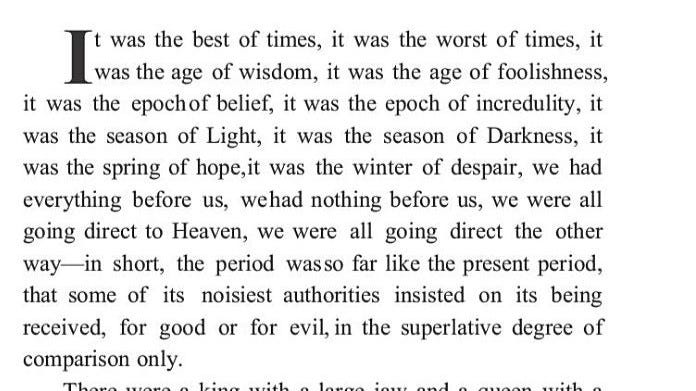
Some years ago an editor declared she could judge a book by its first page. Her boast elicited great skepticism, but I’m inclined to agree with her. A publishing professional can elicit an enormous amount of information from the first page or two of a book.
Grippers
In the hit-the-ground-running storytelling format that has evolved over the last few decades, a compelling first page – or at least first chapter - is almost mandatory. This is certainly true of most fiction today, but applies to much nonfiction as well. The first page of a book is a stranger entering the room; our first impression fixes itself in our mind’s eye and creates distinct expectations. It lingers in our unconscious even as the story progresses, sometimes long after that first encounter. We wonder, “When is that character going to reappear, where do they fit in the plot, how will they affect the story?”
It’s not always easy to put one’s finger on what intrigues an agent or editor in those first pages or what turns them off. Publishing professionals who are otherwise quite articulate are often tongue-tied when asked what they liked or disliked. “I can’t exactly say why I [loved/hated] it, I just did.”
I’ve tried to set my own first impressions into words. Here are a few of my personal criteria:
Have you immediately established the point of view? Who do you want me to root for? Who do you want me to dislike? To trust? To be suspicious of? To be intrigued by?
Have you set the scene visually? Audibly? Olfactorily? Have you immersed my senses so that I feel I am inside the story?
Is there depth in the story and characters? Have you made me feel that there is far more information underlying the plot and characters than you are telling me?
Does your narrative display firm command of the language?
Are there evocative and revealing details in your descriptions of people, places, objects, costumes, weapons?
Is the writing concise? Too much dialogue? Too much exposition?
How effectively have you used dialogue as an action tool? Is it chit-chat or does it reveal character and advance the plot?
Is your storytelling economical and muscular or does it ramble?
Above all, have you converted every narrative opportunity into action? Or do you tell rather than show?
It’s hard to know how to start a book. Not infrequently, the first chapter turns out to be a false start. The author has dreamed of launching the work with this compelling image but once the book is completed, that opening scene may no longer work, or works better later in the story. I frequently tell authors to toss out the first chapter or shuffle it to somewhere else in the book.
A related problem is books that start at the beginning. I know that’s an odd thing to say, but many authors feel they must set the scene in immense detail or chronicle the lead character’s biography before getting to the point. Unless there is a compelling need for all that ancient history, consider starting your book “in medias res”- literally in the middle and with a cliff-hanging scene. This approach will arouse your reader’s curiosity about the past and concern about the future. The English novelist Anthony Trollope described this fictional technique thus:
Perhaps the method of rushing at once “in medias res” is, of all the ways of beginning a story, or a separate branch of a story, the least objectionable. The reader is made to think that the gold lies so near the surface that he will be required to take very little trouble in digging for it. And the writer is enabled—at any rate for a time, and till his neck has become, as it were, warm to the collar—to throw off from him the difficulties and dangers, the tedium and prolixity, of description. . .
It may be interesting to know that Abe Lincoln was born in a log cabin but is that the first thing we want to read? Might it not be better to lead his biography off, say, at the nominating convention and the suspenseful buildup of voting, leaving readers in suspended animation until they learn the outcome? Then you can flash back on the details of Lincoln’s infancy.
But if you’re going to start your novel with a gripping moment, make sure it isn’t the last gripping moment! I see this problem all the time in thrillers and detective stories. They start quite promisingly with a heart-stopping prologue, an act of lurid violence, an incipient collision, an edge-of-your-seat confrontation. Then, inexplicably, the book drifts off into a fog bank. Before long the book comes to a dead halt. I know it’s a dead halt because that’s when I give up reading it. All too often in the mystery genre, a great prologue is followed by an endless series of interviews with witnesses but very little action. Traveling in a car, bus, train or plane to talk to someone is not action. It is traveling in a car, bus, train or plane to talk to someone.
There is a special corner of shame in my value system for typos, grammatical errors and incorrect use of foreign language on those first pages; anything that interrupts the reading experience is a sin. And how much moreso when the very first word of a book is wrong! In a column called “Pet Peeves” I wrote: “Anybody who turns in a manuscript containing a ‘Forward’ deserves automatic shredding of their manuscript. You’d think I would not have to explain to professionals who make their livings with words that a foreword is a fore-word, a word that comes before the main text. But as the Forward-to-Foreword ratio of manuscripts submitted to me is about one out of three, I can see that the correct spelling cannot be stressed enough: FOREWORD! (I hesitate, however, to criticize writers for not knowing the difference between a foreword, a preface, and an introduction, since I don't understand it either.)”
If you heed these recommendations you might be blessed to have an editor pronounce, as Knopf editor Stanley Kaufmann pronounced upon viewing the first page of The Moviegoer by Walker Percy, “It was like looking into a lighted room with life in it.”
*************************
All of my books on publishing are available at Open Road https://openroadmedia.com/search-results/books/Richard%20Curtis
Listen to a podcast interview with Richard introduced by a robot! https://tinyurl.com/5d3ken9e
Not only could I not put the book down, I've seen the gorgeous miniseries maybe 3-4 times. There's NOTHING better to watch than Damian Lewis and Gina McKee as Soames and Irene Forsyte!
Wow! Just downloaded Barchester Towers on Apple Books and got hooked again by the very first pages...