
THE MAGICIAN
Good Record-Keeping Can Make or Break an Agency

A long time ago, in the era of pay telephones, I declared that all you need to become a literary agent is a manuscript and a quarter. Although I launched my firm with a few more resources than that, the fundamental idea was the same: it didn’t take that much wherewithal to set oneself up as a literary agent, and it still doesn’t. However, as soon as we’d made a few sales I recognized that we must turn these casual activities into a business. That meant creating a formal structure; it meant creating policies; it meant creating databases and lists; it meant projecting a host of variables and obstacles and figuring out how to deal with them; it meant thinking logically, a discipline that has defied all my efforts at mastery.
There are four basic categories in every agent’s record-keeping repertoire: 1) Contacts; 2) Submissions; 3) Contracts; and 4) Financial. None of these is a walk in the park.
Take the deceptively simply processing of submissions. First you have to produce a list of potential markets, then identify specific editors. A pitch has to be drafted to which proposals or manuscripts will be attached; links to the author’s website and promotional features must be embedded. A calendar must be created for followups, and a database to keep score of yesses, no’s, maybes, notes (“Editor returning from maternity leave in April”) and comments (“Turned this one down but wants to see next book”). Even nomenclature is challenging: Do you list the author as “John Steinbeck” or “Steinbeck, John”? Is it “The Grapes of Wrath” or “Grapes of Wrath, The”?
Financial functions are even more brain-wracking. Take this example:
Your sub-agent in Moldavenia licensed rights in that country to your client’s novel A Tale of Fourteen Cities for 18,000 Glinkies, the Moldavenian equivalent of $1,000.00 US. Your sub-agent took 10% commission off the gross price, but the Moldavenian government levied a mandatory 15% tax on funds leaving their country. There was a bank charge of $25.00 to transfer funds to your agency. You took 10% commission off the gross price and remitted the balance to your client after recovering $25.00 FedEx charges incurred in a prior transaction.
Okay, hotshot: How much did you pay your client?
At the inception of our operation we could find no templates to help us set up our systems; we had to invent our own. Needless to say, we soon recognized their limitations, or should I say that the limitations came malevolently crashing down on us, causing confusion, delays and snafus. Every time a new element was introduced we had to rejigger our system, sending our bookkeeper into paroxysms of frustration.
But a stroke of good fortune touched us not a moment too soon. Early in the 1990s we got wind of a computer program created expressly for the needs of literary agents. It had been produced by a developer named Peter Grand and was reputed to untangle the very kinds of knots that were driving me and our clerical staff to distraction.
Grand had a Harvard degree in psychology and social relations. He describes himself as “an experienced database, web, and mobile application developer who builds both stand-alone and highly integrated enterprise-wide systems in multiple industries.” He had created programs not just for publishing but marketing and public relations as well. Intriguingly, we learned that he had started out in life as a magician.
We reached out to him.
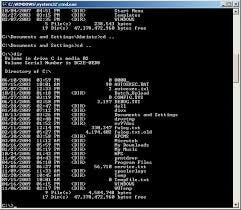
Although he had never worked as an agent, he had been engaged by several agencies to address problems that, if not unique to our breed of business enterprise, were insoluble by off-the-shelf file-organizing software. Grand programmed his original system in Foxpro, a database language invented in the 1980s. The original version looked like the navigation screen on the bridge of a 1950s sci-fi space ship. Primitive-looking though it seemed, however, it offered a powerful framework for continuous integration of cutting-edge web technologies and databases. We loved it because it was flexible and had unlimited capacity. (Records we entered 35 years ago are still instantly accessible.)
We signed on, and in time other agencies did too, enabling Grand to expand and refine his “expert system” so that it can streamline and centralize record-processing and handle any and every challenge that an agent is likely to encounter. Grand describes it as “a powerful framework for continuous integration of cutting-edge web technologies with virtual servers, remote databases, and recent advances in AI to streamline and centralize every process from submission tracking to payment processing, author income, accounting and tax calculations, and rights licensing.”
His demonstration turned out to be life-changing for us, reducing complexities to routine keystrokes, enhancing our efficiency, and rescuing the sanity of our poor suffering bookkeeper. “My system encodes the wisdom of the entire community of literary agents,” he told me. We discovered he truly was a magician. (His secret: “I carefully listen to client needs.”)
Since we adopted his system, many other companies have released agency record-keeping systems employing the latest advances in technology. I can’t speak for them, but hopefully they have conjured every solution as thoroughly as that wizard, Peter Grand. I am happy to pay a long overdue thanks to him.
***********
If you enjoyed this post, Restack it.

Richard Curtis’s latest book, Digital Inc., Inside the Transformation of Publishing from Print to E-Books, now on sale.