
WHY BAD GUYS MAKE GOOD CHARACTERS
Every Villain is Somebody’s Hero

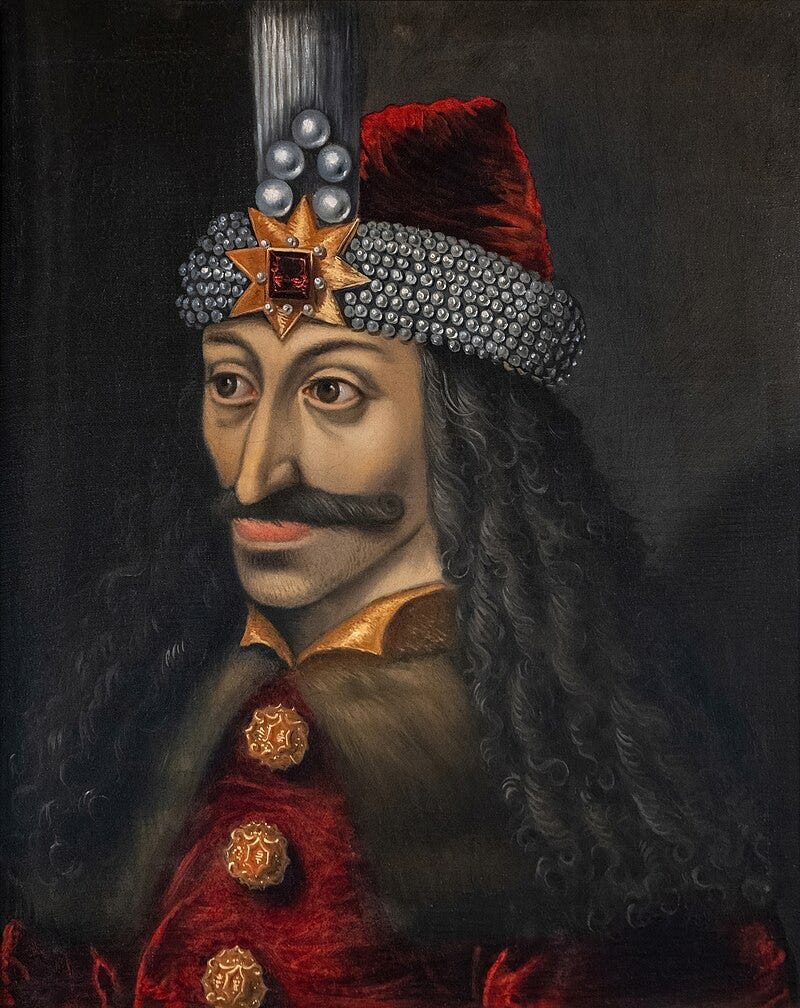
VLAD THE IMPALER, a.k.a. Dracula, had a mommy and daddy, two wives, three sons and lots of friends.
*********************
When you think about evil characters in history, you realize that although their behavior may have been despicable, their contemporaries found them attractive, interesting, empathetic, gracious, seductive, lovable or all of the above. Their biographers portray them as people who loved their spouses, doted on their children, were steadfast friends and loyal patriots, performed acts of kindness, charity and altruism. They just happened to be people who skewered, strangled and beheaded people they didn’t like..
Juxtaposed against their savagery, licentiousness and cruelty, their virtues are almost impossible for us to reconcile. And that paradox is exactly what makes them compelling characters on which to base fictional villains. Against your better instincts, you are compelled to like them. You may despise yourself for doing it but you cannot resist their attraction. Think of Robin Hood, of Tony Soprano, of Michael Corleone; think of Satan himself, the quintessential charmer. A good fictional bad guy is someone you love to hate and hate to love.
If you describe your villains as two-dimensional boo-hiss evildoers, you will turn off your readers. Even secondary bad guys need to be three-dimensional somebodies and not just hoods, thugs and goons. If nothing else, make them comical and entertaining, but do something to bring them to life. Any character worth creating is worth creating well.
Perhaps the most important thing we must remember about the wicked is that they do not believe they are wicked. Indeed, they are surprised, even shocked, to discover that others do not find them benevolent, goodhearted and gracious; they are even vain about their righteousness and integrity. The moral world they inhabit is not your moral world, but it is one they are completely comfortable in. The rulers of societies that sacrificed humans or banished the aged to die on mountaintops justified these practices as culturally normal and proper, even their sacred duty. They would have been mystified and even offended to be told they were wicked and their acts horrifying. So, you should strive to create a credible fictional world in which your antagonists are interesting, likeable, engaging individuals who are completely comfortable in their value system - at least until a hero or heroine comes along to challenge their certainty. Or maybe they begin to doubt their own rectitude. That’s when your story come to life!
*******************

Richard Curtis’s latest book, Digital Inc., Inside The Transformation of Publishing from Print to E-Books, is now on sale.
This is giving me so much to think about! Thanks for the reminder that we need to make the bad guys just a little likable.
Ha! Great stuff, Richard. I will put this to work immediately!
I have several members of my "ensemble cast" who grow and move from cads and bounders to truly lovable characters. (I think/hope.) But I've got a couple of one-off bad guys who can definitely use some work. You've given a good challenge here, and challenge accepted!
Keep it up, Richard! Always loving and appreciating your wisdom.
BTW: My earliest author hero was Fritz Leiber. I remember in junior high, underlining some lines from Fafhrd and the Gray Mouser. I distinctly remember that was the very first time I ever did such. Thinking, "someday I'd like to write like this." I'm pretty sure I recall that you worked with him. Maybe you can share a little about him sometime!